
The Highest of Every Faith
Or, Spiritual & moral pluralism

It is now no more that toleration is spoken of as if it was the indulgence of one class of people that another enjoyed the exercise of their inherent natural rights. For happily, the government of the United States, which gives to bigotry no sanction, to persecution no assistance, requires only that they who live under its protection should demean themselves as good citizens.”
~ George Washington
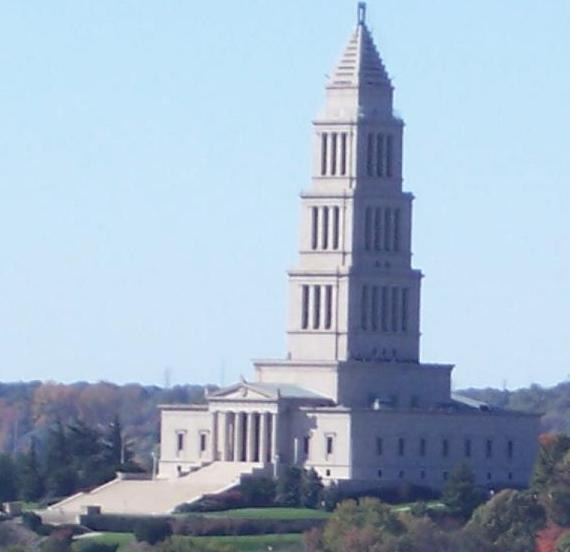
Though rarely living up to it, we Americans have historically been an idealistic sort. My own state, the Commonwealth of Pennsylvania, served in our early history both as colonies and then as nation as a refuge for religious minorities and strange seekers. Pennsylvania has been happy home to many a Freemason, Jew, Anabaptist, and alchemist. I myself live a walk away from Unitarian, Quaker, Swedenborgian, and Bön congregations, besides those you might expect. The United States has welcomed Hindu and Buddhist teachers in university lecture halls and church sanctuaries. We have also produced our own spiritual unique high-minded spiritual traditions, from Transcendentalism, to New Thought, to Spiritualism.
This is how our founders, howsoever flawed, wanted it. And it is how proud patriots want it still.
It is small wonder, then, that this Nation and this State should have produced a yogin like myself — and many others besides. Though some yogis fall to sectarianism, it is our great task not to convert anybody to a new religion, but to help everyone we encounter to find their own highest ideal and to strive after it.
If you are a Catholic, a Buddhist, a Muslim, an Indigenous traditionalist, or an atheist, it matters little enough to me. Have you internalized the ethics of Christ? The close divine friendship of Mohammed, the seeking spirit of Siddhartha Gautama?
I once thought of myself as a Perennialist, a believer in the notion that all of the world’s great spiritual traditions are more or less splintered revelations and survivals of a single Original Religion. I no longer buy into that; reason simply doesn't support it. There must be immense logical pretzel-twists made and intellectual Procrustean beds bloodied to make such a Perennial Philosophy seem tenable. But there's a kernel of truth behind it:
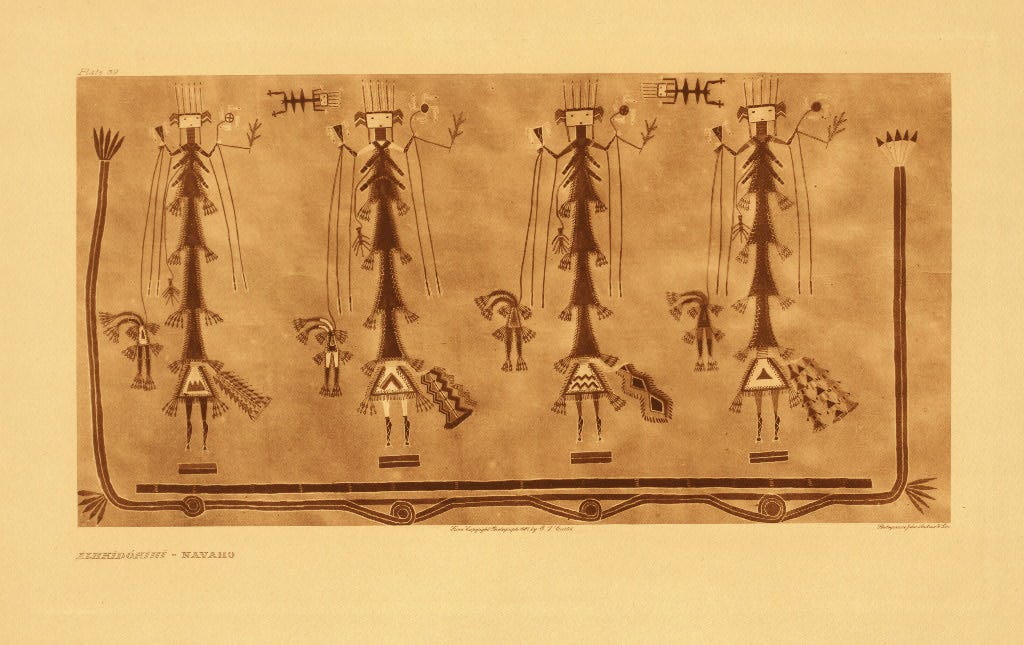
All of our great spiritual traditions, before they are corrupted by either greed or puritanism, are efforts at living up to our deepest ethical ideals and insights into the relationship of Self and Cosmos. This is as true of Yoga as it is of contemplative Christianity, of Neoplatonic theurgy as the Beauty Way of the Diné. And in this spirit, if we take our own spirituality seriously, it is our bounden duty to protect and uplift that of pur neighbor. A liberal approach to religion — that is, an understanding that religion has a potential encourage, inform, and fuel our drive to freedom — is the only way to reclaim the future of humanity.
And it is also the only position befitting the highest vision of Yoga.